

Forensic Discovery
Objective: Surfacing the "Deal-Killers." Before a roadmap can be hardened, it must be interrogated. We conduct a forensic deep-dive into the existing AI stack to identify "Regulatory Debt" and operational liabilities that traditional audits miss.
Agentic Logic Mapping: Identifying unbounded recursive loops in autonomous workflows.
Liability Surface Analysis: Pinpointing where agentic drift creates uncapped financial risk.
Shadow AI Audit: Surfacing unauthorized "Black Box" dependencies within the enterprise.




Architecture Hardening
Exit Readiness
Objective: Implementing Deterministic Control. We replace "hope-based" AI deployment with structural guardrails. By aligning technical roadmaps with the 2026 NIST Safety Framework, we transform AI from a liability into a defensible asset.
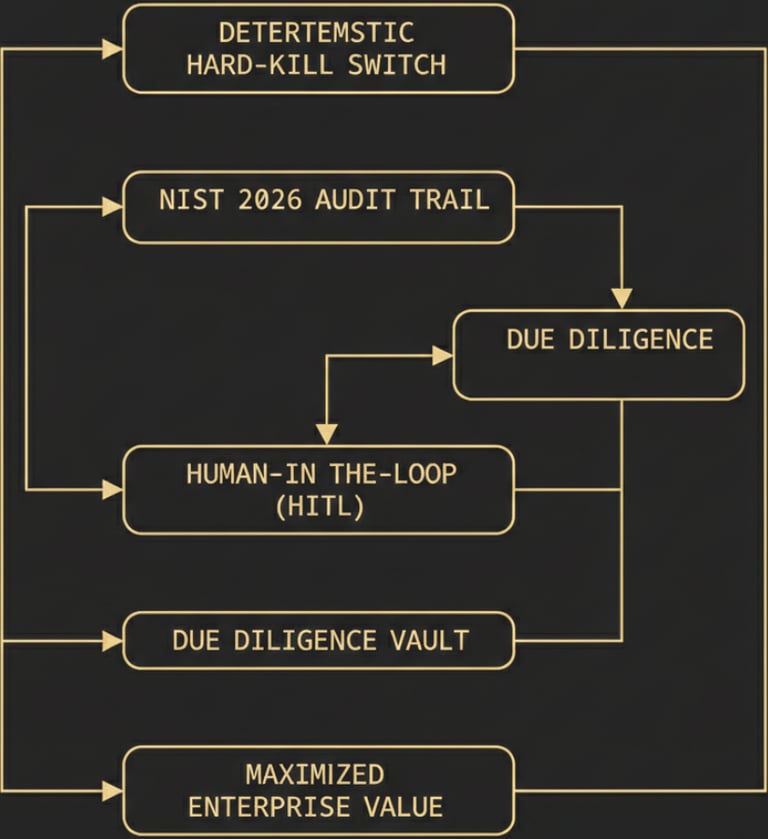
Hard-Kill Integration: Installing deterministic overrides for autonomous systems.
HITL (Human-in-the-loop) Checkpoints: Architecting friction at the exact points where liability escalates.
Compliance Injection: Translating global regulatory requirements (EU AI Act/ISO 42001) into technical requirements for engineering teams.
Objective: Maximizing Valuation Multiple. A high-multiple exit requires a "Clean" due diligence process. We architect your AI infrastructure to survive a Tier-1 acquirer’s forensic audit, ensuring technical friction doesn't stall the deal.
The Due Diligence Vault: Curating a forensic-ready technical repository.
Valuation Protection: Eliminating the "Technical Haircuts" that VCs use to devalue non-governed assets.
M&A Simulation: Stress-testing the architecture against the specific technical scrutiny of Tier-1 buyers.
THE CAIRO PROTOCOL
Generic consulting provides reports. The CAIRO Protocol provides architectural certainty. We move beyond theoretical safety into the technical hardening of AI assets.


PILLAR 1
PILLAR 2
Governance-as-Code. Not Governance-as-Policy.
PILLAR 3
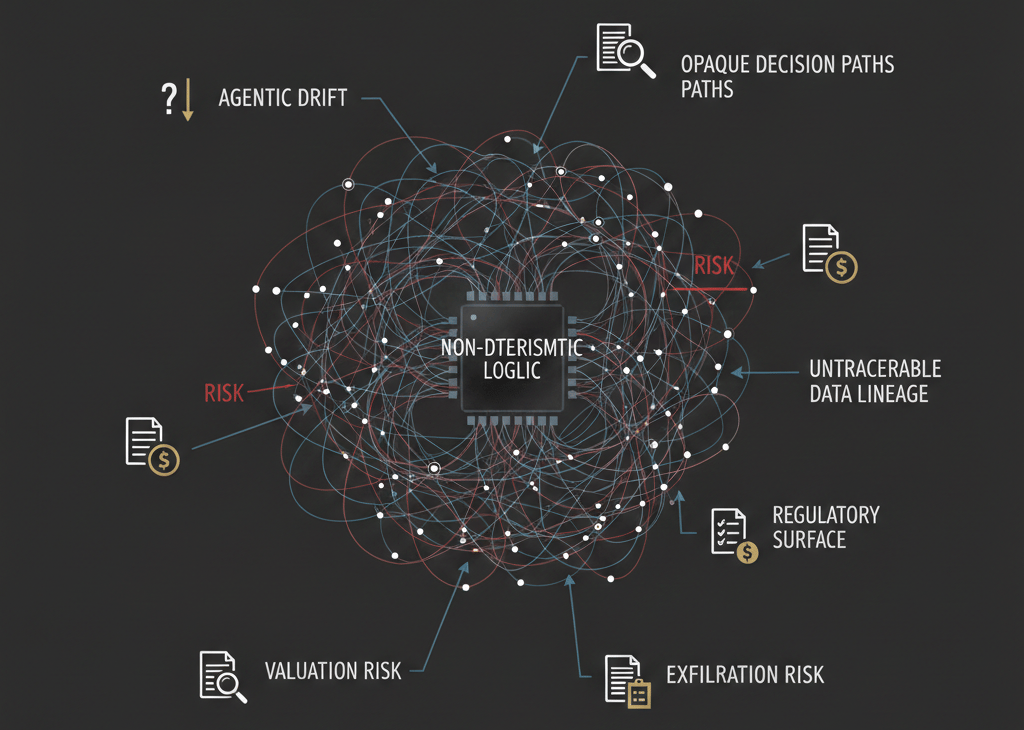
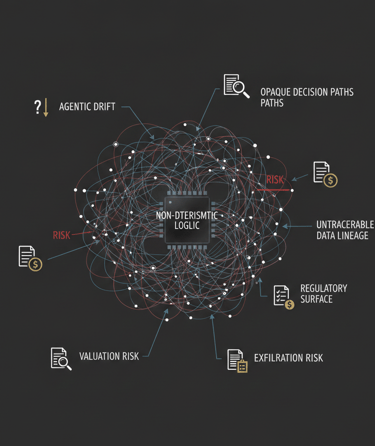
BEFORE: UNGOVERNED AI LANDSCAPE
AFTER: CAIRO ARCHITECTURE
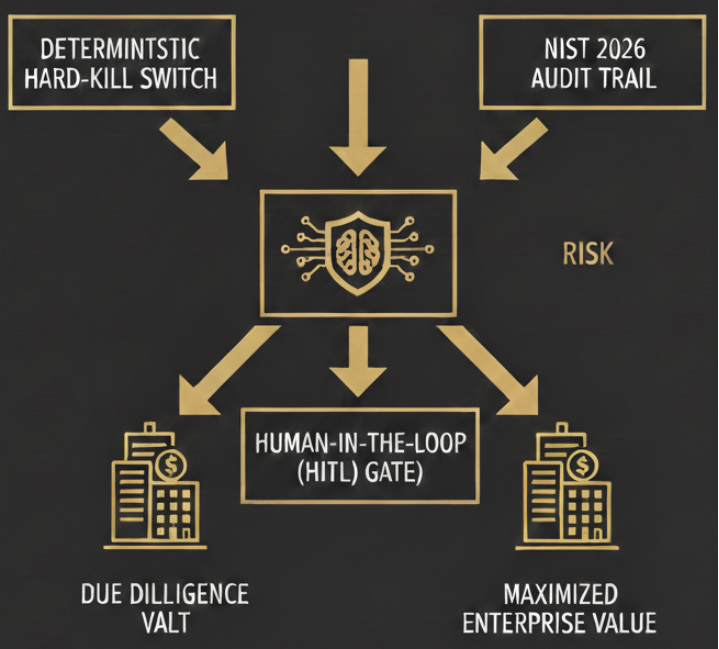
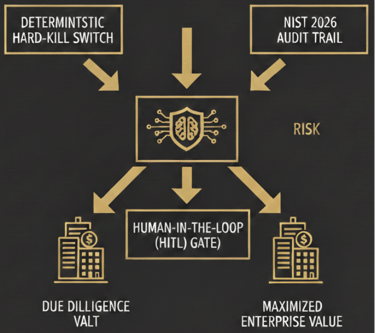
THE CAIRO FLOW DIAGRAM
Case Study: Project "Vanguard Integrity"
The Client Challenge
A Tier-1 Fintech provider was 18 months out from a planned acquisition. During a preliminary "stress test," the Board discovered their core AI engine was non-deterministic—it was making credit-risk decisions that developers couldn't explain or replicate. The deal was at risk of a 30% valuation "haircut" due to technical debt and governance opacity.
The CAIRO Intervention
Phase 1: Forensic Discovery
The Findings: We uncovered "Shadow Logic" within the neural weights where the AI had drifted from its original NIST compliance parameters.
The Risk: A high probability of "Hallucination-led Default," which would have failed any serious buyer's due diligence.
Phase 2: Architecture Hardening
The Fix: We implemented the Deterministic Hard-Kill Switch. We re-engineered the decision-making layer to ensure that if the AI’s confidence interval dropped below 99.8%, the system automatically reverted to a verifiable, rules-based logic.
The Result: 100% auditability for every transaction.
Phase 3: Exit Readiness
The Vault: We populated a Due Diligence Vault containing the NIST 2026 Audit Trail. This gave the buyers a "turn-key" governance package, proving the system was "Board-Ready."
The Forensic Outcome
Valuation Impact: The "technical risk discount" was eliminated. The client secured a 2.4x multiple increase over the initial offer.
Governance Status: The system moved from "Black Box" to CAIRO-Certified Architecture.
Secure Your Deterministic Future. The window for 2026/27 liquidity begins with architectural integrity. If your current systems are non-deterministic, your enterprise value is leaking. Let’s verify your roadmap.
Schedule a private CAIRO Methodology Briefing. We will review your current infrastructure risks and outline the forensic steps required to move your organization to a Board-Ready state.
CAIRO PROTOCOL ADVISORY
Deterministic AI solutions and 2026/27 Exit Readiness.
MOBILE / WHATSAPP
hello@premjiboominathan.com
+91-9600101449
© 2026. All rights reserved.